


Closing the Skills Gap: Skills-Based Hiring, Talent Mobility, and Upskilling in Workforce & HR Technology
Roughly three in four employers say they cannot find the skilled talent they need, the widest gap in over a decade. That pressure is collapsing hiring, mobility, and learning onto a single skills-based system of record and driving one of software’s most active M&A markets.
Workforce and HR technology is the software employers use to find, hire, develop, and retain their people. The urgency is hard to overstate: roughly three in four employers say they cannot find the skilled talent they need, the widest gap in over a decade. That pressure is reshaping a category sitting where enterprise software meets human capital, driven by three forces — the shift to skills-based hiring, the rise of AI-native platforms, and sustained investment in workforce skills.
Those forces map to the three sub-industries this report examines: skills-based hiring, talent mobility, and corporate learning and upskilling. Each has its own economics and buyer set, but they are converging on the same prize — a single, skills-based system of record that spans the employee lifecycle. The consolidation race to own that layer is what makes workforce and HR technology one of the most active corners of software dealmaking.
How Skills-Based Hiring, AI-Native Platforms, and Suite Consolidation Are Reshaping Workforce & HR Technology M&A
Large, fast-growing, and structurally fragmented. The HR-technology market reached roughly $42 billion in 2025 and is projected to approach $78 billion by 2031, a low-double-digit growth rate. Yet it remains deeply fragmented: industry surveys count more than 1,500 distinct HR solutions, leaving a deep, founder- and venture-owned mid-market beneath a handful of suite vendors. That fragmentation, paired with high gross retention and mission-critical workflows, is the classic setup for sustained roll-up and platform consolidation.
Record M&A led by AI and suite consolidation. Workforce and HR technology has been among the most active corners of software dealmaking, with 402 transactions tracked since Q1 2024 — about 40 a quarter — and deal volume holding remarkably steady. Activity concentrates at the hiring layer, led by talent acquisition, and the throughline is a race to embed AI and assemble unified, skills-centric platforms. Deals span take-privates, payroll and HCM scale consolidation, sponsor recapitalizations, and learning consolidation.
Three converging sub-sectors. Skills-based hiring, talent mobility, and corporate learning and upskilling are converging into unified talent-intelligence platforms built on a common skills foundation. As employers seek a single system of record for skills, the boundaries between hiring, developing, and retaining are dissolving — concentrating value in players that can own the skills graph end to end and monetize it across the employee lifecycle.
Workforce & HR Technology at a Glance
The category sits where enterprise software meets human capital, and three forces are reshaping it: the shift to skills-based hiring, the spread of AI-native platforms, and sustained spending on employee upskilling. This report covers the three talent-centric segments — talent acquisition technology, talent management and internal mobility, and corporate learning and upskilling — and the M&A dynamics specific to each.
Market Size and Growth
As of 2025, the HR technology market is estimated at roughly $42.3 billion and is projected to reach about $78 billion by 2031, a CAGR near 10.4%. That scale is producing sustained dealmaking: 402 transactions have been tracked since Q1 2024, roughly 40 a quarter, with volume holding remarkably steady through two years of otherwise choppy software M&A.
The market splits into four segments. Payroll and core HCM — the most mature, slowest-growing layer at an estimated $11.1 billion of 2025 spend — consolidates on its own track and is covered here only where it intersects the skills stack. The three talent-centric segments together account for roughly $31 billion of 2025 spend, referred to below as core talent-technology spend.
The Wider Addressable Market
Widening the lens beyond software to the full addressable workforce market — adding services, job-board and marketplace revenue, and consumer- and academic-scale learning — brings the total to roughly $185 billion in 2026. Spend is heavily concentrated: corporate e-learning and digital reskilling dominates at roughly $154 billion, about 83% of the total, a far broader measure than the enterprise LMS and LXP software segment. Online job boards and talent marketplaces add about $17 billion, talent acquisition software roughly $11 billion on a global basis, and career coaching and counseling about $3 billion. Category sizes here are drawn on a broader, global basis than the core-spend figures above, so segment totals differ by design.
Public funding underpins private demand across this ecosystem. WIOA appropriations rose from $5.0 billion in 2020 to $5.7 billion in 2025, roughly a 2.7% annual increase, before easing slightly to $5.6 billion in 2026. Even with that dip, the stream provides a durable base of federal support that helps sustain demand as employer budgets fluctuate — a more resilient environment than many purely discretionary HR technology categories.
Key Segments
Corporate Learning & Upskilling covers learning management and experience platforms, content marketplaces, upskilling, digital credentialing, and Learning-and-Employment Records. It is the largest of the four segments at an estimated $16.8 billion of 2025 core talent-technology spend, projected to reach about $34.1 billion by 2031. The core opportunity is to close the gap between credentials and employment outcomes, forging a verified, measurable link between what learners complete and the workforce value those credentials carry. The segment is actively consolidating: Coursera absorbed Udemy in a $2.5 billion all-stock merger in May 2026, joining a field of scaled platforms that includes Docebo, Degreed, Skillsoft, and Guild.
Talent Management & Internal Mobility spans performance, succession, career pathing, and internal talent marketplaces, increasingly sitting atop a skills-intelligence layer that is becoming employers’ system of record. At an estimated $8.0 billion of 2025 core talent-technology spend, it is projected to grow roughly 2.3x to about $18.7 billion by 2031, a CAGR near 15% and the fastest of the three segments. Adoption of internal talent marketplaces reached roughly a third of employers by 2025, up sharply year over year. The space is venture-heavy with few realized exits: Gloat, Beamery, and Fuel50 compete in a segment where the valuation benchmark remains Cornerstone OnDemand’s $5.2 billion take-private by Clearlake in 2021, even as incumbents increasingly build mobility natively.
Talent Acquisition Technology includes sourcing, applicant tracking, assessments, recruitment marketing, AI matching, and external talent marketplaces — the fastest-consolidating segment, propelled by the shift to skills-based hiring. It accounts for an estimated $6.4 billion of 2025 core talent-technology spend, projected to reach $8.9 billion by 2031, with AI-driven matching and assessment the fastest-growing functions. Specialists Eightfold, Phenom, SeekOut, and HireVue compete beneath suite vendors Workday, SAP, and Oracle. Recent deals underscore appetite from both strategics and sponsors: SAP acquired SmartRecruiters in September 2025, while iCIMS sits under Vista Equity Partners and TA Associates at a roughly $3 billion valuation.
M&A Trends & Drivers
Workforce and HR technology is among the most active software M&A markets, driven by durable structural forces rather than a cyclical demand swing: the shift to skills-based hiring, AI’s spread across HR workflows, retention and workforce-planning pressure, and a deeply fragmented vendor base. Proven, AI-native assets are scarce, supporting premium valuations and creating multiple, well-capitalized paths to exit for the founders and operators who build these platforms.
Current State of M&A Activity
Navagant maintains deep, curated coverage of the segments where our clients operate. We have tracked 402 transactions since Q1 2024, roughly 40 a quarter, with deal volume holding remarkably steady across ten consecutive quarters. That cadence places the sector at the center of a consolidation wave driven by platform-and-add-on strategies, AI-capability buys, and the roll-up of best-of-breed tools into unified suites.
By deal volume, the 402 transactions cluster at the hiring layer. Talent acquisition and recruiting technology leads with 132 deals, followed by corporate learning and LMS with 87 and coaching, mentoring, and employee experience with 69; staffing and talent marketplaces (46), skills assessment and credentialing (31), HR services and operations (26), and talent management and internal mobility (11) form the tail. Tellingly, talent management and internal mobility — the fastest-growing segment by spend — shows the fewest completed deals: a venture-heavy field with few realized exits, and therefore the clearest whitespace for acquirers.
Key Drivers of M&A Activity
The level of activity is not transient. It is driven by several factors that make workforce and HR technology a compelling and durable target for acquisition.
A fragmented vendor base with clear roll-up economics. Industry surveys count more than 1,500 distinct HR solutions. Beneath a small group of scaled strategic acquirers — Workday, SAP and SuccessFactors, Oracle, ADP, and Paychex — sits a deep mid-market of venture- and PE-backed specialists focused on learning, credentialing, workforce analytics, talent mobility, compliance training, and skills intelligence. High gross retention and mission-critical workflows make these assets attractive to absorb, and scale is increasingly required to fund AI investment, data partnerships, and enterprise distribution.
Structural talent shortages anchor demand. Roughly three in four employers report they cannot find the skilled talent they need, the widest gap in over a decade. That converts workforce software from a discretionary line item into an operational necessity. Around 85% of U.S. employers now report skills-based hiring and about 53% have dropped degree requirements, concentrating demand on assessment, matching, and credential verification — precisely the functions changing hands most often.
AI capability is a buy decision, not a build decision. Proven, AI-native assets are scarce relative to demand, and suite vendors are paying for them rather than waiting. Workday acquired Paradox for $1 billion in cash in October 2025, building on its 2024 purchase of HiredScore; SAP acquired SmartRecruiters; Docebo bought 365Talents to embed a company-wide skills taxonomy. The pattern is consistent: incumbents buying matching intelligence, conversational automation, and skills graphs to avoid falling behind on an agentic-AI roadmap.
Budget pressure favors suite consolidation. As HR budgets stay flat or tighten, employers increasingly prioritize consolidating onto fewer platforms over net-new standalone purchases. That rewards scaled vendors with broader functionality, stronger distribution, and embedded system-of-record positions, while pressuring best-of-breed tools to either prove clear ROI or become acquisition targets. Category leaders are well positioned to absorb specialized capabilities, supporting premium valuations for differentiated assets and a steady cadence of strategic and sponsor-backed M&A.
Workforce and HR-tech M&A should stay highly active through 2026 and beyond. A fragmented vendor base, the skills-based shift, native-AI urgency, and the convergence of hiring, mobility, and learning into talent-intelligence platforms continue to draw both strategic and financial buyers — and the segment with the strongest growth remains the one with the fewest realized exits.
| Segment | 2025 Core Spend | 2031E | Representative Players | Demand Driver |
|---|---|---|---|---|
| Corporate Learning & Upskilling | ~$16.8B | ~$34.1B | Coursera, Udemy, Docebo, Degreed, Skillsoft, Guild | Closing the gap between credentials and employment outcomes; roughly 70% of the skills in most jobs are expected to change by 2030 |
| Talent Management & Internal Mobility | ~$8.0B | ~$18.7B | Gloat, Beamery, Fuel50, Cornerstone OnDemand | Fastest-growing segment at roughly 15% CAGR; internal talent marketplace adoption reached about a third of employers by 2025 |
| Talent Acquisition Technology | ~$6.4B | ~$8.9B | Eightfold, Phenom, SeekOut, HireVue, iCIMS, SmartRecruiters | Fastest-consolidating segment; about 85% of U.S. employers report skills-based hiring and roughly 53% have dropped degree requirements |
| Payroll & Core HCM (consolidates on its own track) |
~$11.1B | ~$16.0B | Workday, SAP SuccessFactors, Oracle, ADP, Paychex, Dayforce | Most mature, slowest-growing layer; scale consolidation rather than capability acquisition |
Emerging Trends
Three trends define the workforce and HR technology landscape: the shift from degree-based to skills-based hiring, the convergence of public and private reskilling capital under outcome accountability, and AI-driven disruption forcing a portable skills record. Together they set where value and risk concentrate in 2026 and beyond.
Skills-based hiring crosses from pronouncement to practice. Roughly 85% of U.S. employers now report skills-based hiring and about 53% have dropped degree requirements, yet execution lags: a Burning Glass Institute and Harvard Business School study found the change produced fewer than one additional skills-based hire per 700. That gap between stated policy and realized practice is itself the opportunity. 2026 marks the inflection point as policy gives way to operating models, concentrating demand on assessment, matching, and credential verification — and on the vendors that can prove a hire was made on demonstrated capability rather than a credential proxy.
Workforce capital is professionalizing around outcomes. Public and private capital is converging on reskilling under outcome-accountability mandates. A WIOA reauthorization bill, A Stronger Workforce for America Act of 2026, was introduced in April and advanced out of committee; it would modernize the program atop roughly $5.6 billion in FY26 WIOA funding, though it has not passed and the system continues under current law. In the private sector, fresh commitments demand measurable ROI from enrollment to employment: Meta’s $115 million America’s Workforce Academy, BlackRock’s $100 million Future Builders program, and Caterpillar’s $100 million, five-year upskilling pledge. Globally, roughly $500 billion a year now flows into adult upskilling and reskilling, about 0.5% of GDP. For acquirers, the practical consequence is that outcome data — placement, wage gain, retention — is becoming a diligence item rather than a marketing claim.
AI disruption forces a portable skills record. Projections point to 170 million new roles and 92 million displaced by 2030, a net gain of 78 million and 22% churn. Up to 30% of hours worked could be automated by 2030, implying roughly 12 million additional U.S. occupational transitions, and about 70% of the skills in most jobs are expected to change over the same period. At that pace — with more than one million credentials issued by some 60,000 U.S. providers — digital Learning-and-Employment Records and interoperability standards such as 1EdTech Open Badges and the Comprehensive Learner Record are emerging as the ecosystem’s connective tissue. That interoperability layer is a control point, and it is one acquirers increasingly want to own outright.
Notable Sub-Sector Transactions
Talent Acquisition Technology
September 2025: SAP completed its acquisition of SmartRecruiters, the enterprise talent-acquisition platform, folding modern recruiting — sourcing, candidate CRM, and AI-assisted screening — into SAP SuccessFactors. The deal gives SAP a contemporary hiring front end for its HCM suite and moves best-of-breed talent acquisition inside one of the largest platform vendors, sharpening the race to own the full hire-to-develop lifecycle. It shows suite vendors buying their way into modern, AI-led recruiting front ends.
October 2025: Workday completed its acquisition of Paradox for $1 billion in cash, adding high-volume conversational recruiting automation to its HCM suite and building on its 2024 purchase of AI talent-orchestration provider HiredScore. Paradox brings chat-based candidate screening and scheduling, while HiredScore contributes explainable AI that matches internal and external talent to roles — both core to a skills-based operating model. Together they accelerate Workday’s agentic-AI roadmap and show suite vendors racing to embed matching intelligence across the full hiring and mobility workflow.
HCM & Talent Intelligence
February 2026: Thoma Bravo completed its take-private of Dayforce for $12.3 billion, the largest HR-technology transaction of the cycle. The deal gives a deep-pocketed sponsor room to accelerate Dayforce’s AI roadmap and global HCM expansion away from quarterly public-market scrutiny. Its scale signals conviction that AI-led human-capital management is a durable, consolidatable category, and sets a valuation marker that reverberates across the sponsor landscape.
January 2026: Docebo acquired 365Talents, a France-based AI skills- and talent-intelligence platform, for approximately $55 million. The deal embeds a company-wide skills taxonomy into Docebo’s learning suite, enabling the platform to move beyond skills identification toward skills activation across learning, workforce planning, and internal mobility. It highlights how skills intelligence is becoming the connective layer between learning, talent mobility, and broader workforce transformation.
Corporate Learning
June 2026: Handshake acquired Uplimit, an AI-native learning platform specializing in cohort-based upskilling, hands-on skill-building, and verified credentials. Uplimit’s project-based learning and credentialing plug directly into Handshake’s career network of 25 million job seekers, more than 1,600 education partners, and one million employers, powering a new AI skills studio tied to career paths and job functions. The deal positions Handshake at the intersection of AI skills development and hiring, converting verified, demonstrated capability into the hiring signal employers can trust over resumes.
May 2026: Coursera completed its all-stock combination with Udemy, valuing the combined company at approximately $2.5 billion and consolidating two of the largest online learning and content marketplaces. The combination pairs Coursera’s credential and degree partnerships with Udemy’s skills-based course library and enterprise business, building scale in content, credentialing, and enterprise upskilling. It reflects how learning platforms are racing to pair AI-curated content with verified, employer-recognized credentials.
Navagant Case Study
A representative transaction from Navagant’s workforce and HR technology practice, showcasing our expertise across government workforce software, skills-based career navigation, and outcome-accountable talent platforms.
Background
PAIRIN, founded in 2012 and based in Denver, is a leading developer of software for the government workforce and adult education (“GWAE”) market. Its flagship platform, My Journey, streamlines workforce upskilling and reskilling, AI-driven career navigation and job search, case management, compliance support, and impact reporting and analytics for state agencies, workforce boards, education systems, and nonprofits. With over a decade of operating history, PAIRIN is dedicated to expanding equitable access to education and employment opportunities through data-driven solutions.
Process Highlights
Navagant served as exclusive financial advisor to PAIRIN, running a focused process that showcased the company’s statewide government contracts, recurring SaaS revenue, and direct alignment with the skills-based, outcome-accountable workforce-development theme drawing both strategic and financial buyers.
Successful Outcome
PAIRIN was acquired by Digital Capital Partners (“DigiCap”), a Chicago-based private investment firm whose human-services and case-management software portfolio combines with PAIRIN’s workforce technology to create an end-to-end public-sector solution, providing capital and an ecosystem to accelerate PAIRIN’s mission.
Meet the Team Behind This Report

Shawn is a Founding Member and Managing Director of Navagant and brings over 19 years of experience to the firm. Shawn has led execution efforts on 70+ transactions resulting in over $3.5 billion of proceeds for clients. He assists owners of middle-market companies in achieving their strategic growth objectives, exit strategies, and liquidity goals. Formerly, he served as a Managing Director of Capstone Partners in the Education and Training practice. His investment banking career began with Raymond James, where he focused on deal execution and client development for both public and private companies. Shawn’s previous experience includes serving as an officer in the US Navy where he served as a destroyer navigator and communications officer, student naval aviator, and fleet Tomahawk cruise missile officer.

With over two decades of experience, Jacob is the Managing Director of Navagant, having been a key contributor since its inception. Leading as Managing Director and Co-Founder, he has played a vital role in establishing Navagant’s strong brand presence, building relationships with clients and servicing them with integrity. Demonstrating a remarkable talent for deal-making and unwavering dedication to his clients, Jacob has earned recognition as a leader in various industries, most prominently the Education and Training industry. He began his career at Rabobank International and later focused on software and direct marketing industries with Andersen Corporate Finance LLC. Then, in 2003, he founded Capstone Partners and led its Education and Training Practice until 2023, when he co-founded Navagant. As a highly accomplished leader, Jacob serves as an inspiring mentor and role model to the firm’s up-and-coming professionals, further solidifying his significant contributions to the investment banking industry.

Sachin is a Vice President at Navagant. Prior to Navagant, he was an Associate in Capstone Partners’ Education and Training practice and an Analyst at DC Advisory in the industrials group, focused on sell-side and buy-side M&A advisory. He also interned at Sagent Advisors in Chicago, IL.
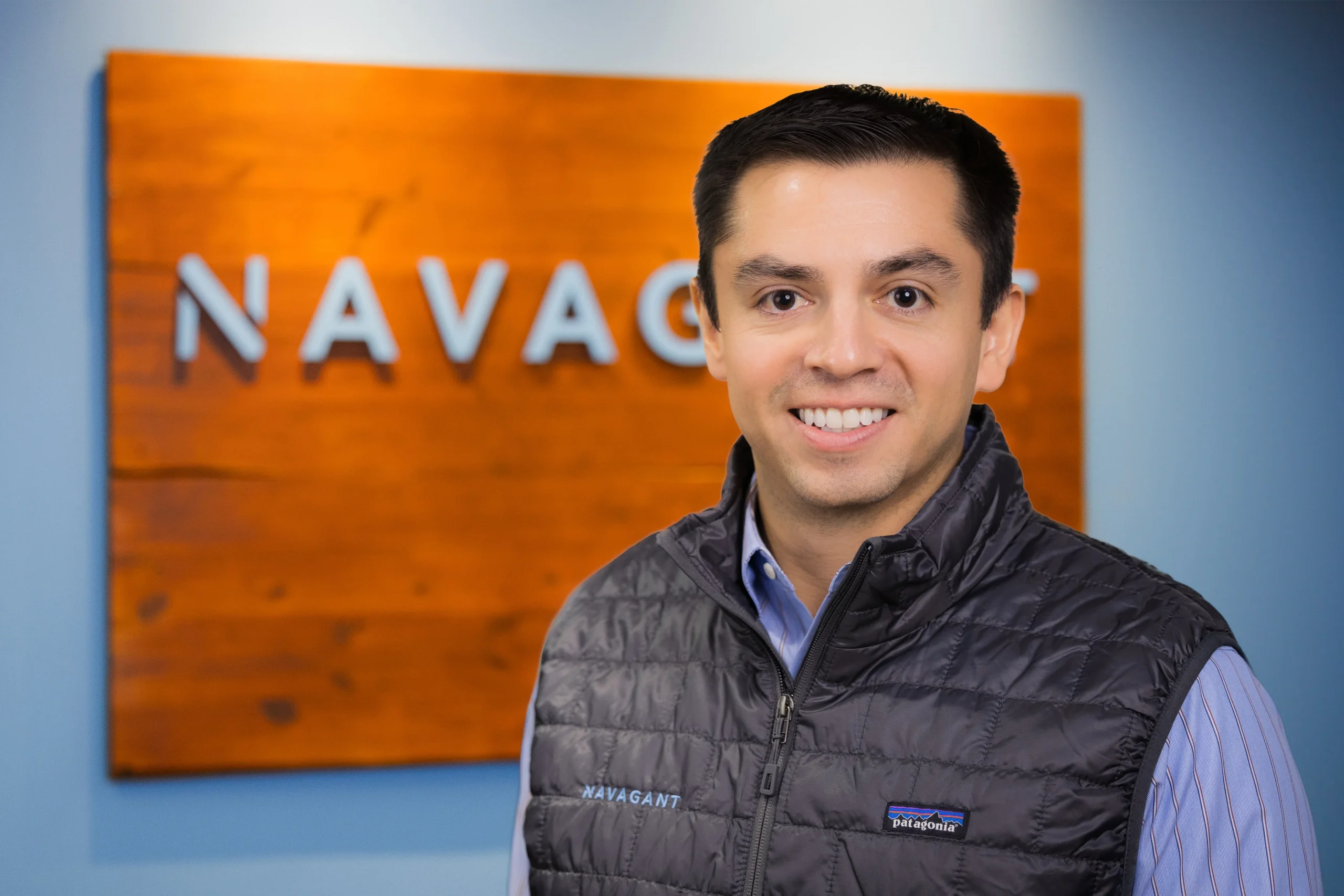
Jorge is a Senior Vice President at Navagant and has over 10 years of investment banking and commercial banking experience with expertise in M&A, leveraged finance, and project finance. Prior to joining Navagant as a Founding Member, Jorge was a Vice President in Capstone Partners’ Education and Training practice.
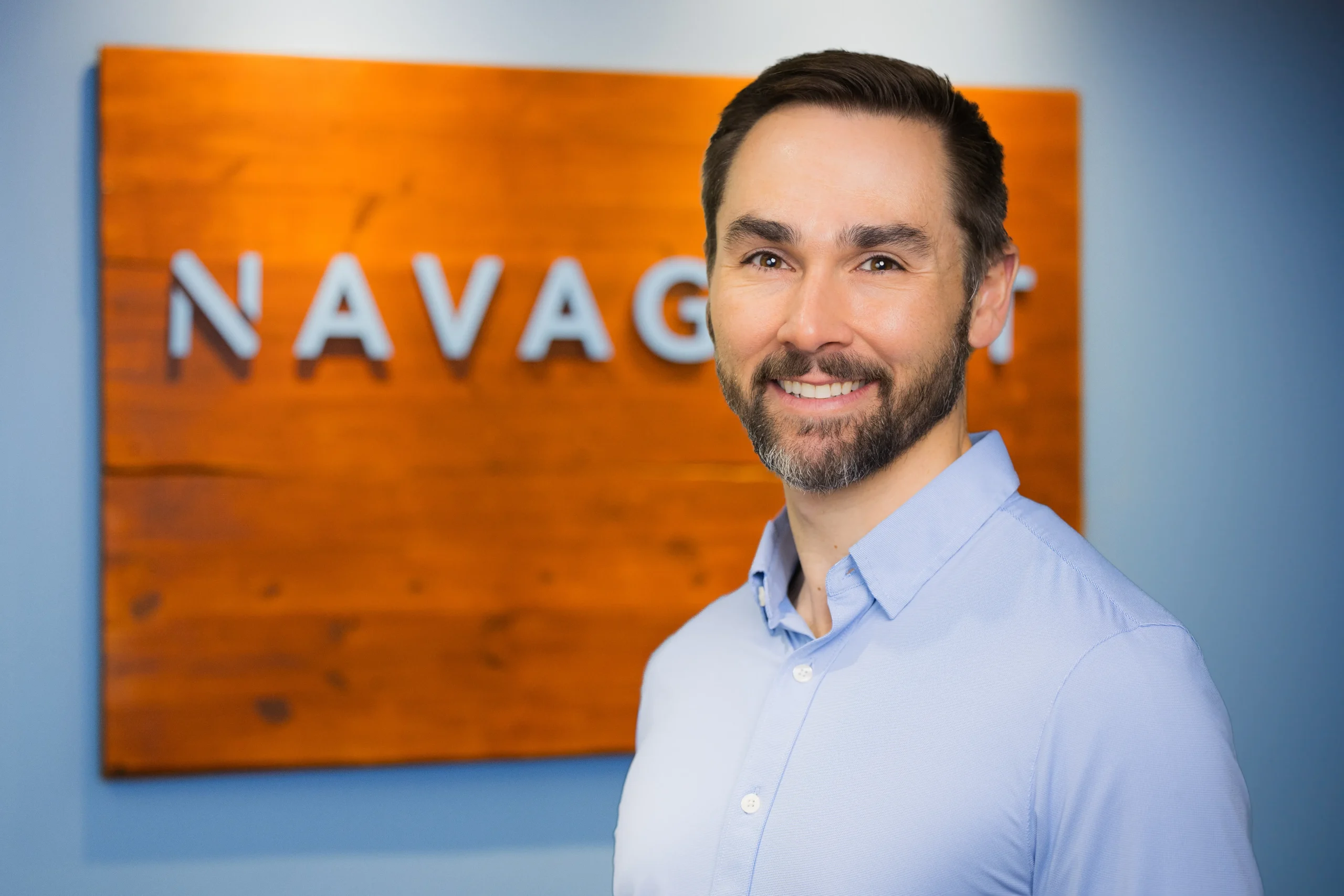
Jeff is a Director at Navagant and has over 16 years of Capital Markets, M&A, and Corporate Finance experience across Consumer & Retail, Diversified Industrials, Energy, Logistics & Transportation, Business Services, and Specialty Finance industries. Prior to joining Navagant as a Founding Member, Jeff was a Vice President in Capstone Partners’ Education and Training practice and a Senior Vice President in BB&T Capital Markets’ Debt Capital Markets Origination team, where he was integral in expanding the Bank’s Corporate Banking initiative by helping originate over $500 billion in corporate bonds. He began his career as an Analyst in the BB&T Capital Markets M&A team serving a wide variety of industries.

Caleb is a Vice President at Navagant. Previously, Caleb was an Associate at Capstone Partners’ Education and Training practice. Prior to Capstone, he was an Analyst at Carr, Riggs, and Ingram Capital Advisors, the investment banking subsidiary of a Top-20 regional accounting firm. He holds a BBA in Financial Management from Charleston Southern University.
Endnotes & Sources
- ManpowerGroup. 2025 Global Talent Shortage Survey. 2025. https://go.manpowergroup.com/talent-shortage
- Mordor Intelligence. HR Tech Market Size, Growth Drivers & Industry Outlook 2031. 2025. https://www.mordorintelligence.com/industry-reports/hr-tech-market
- Sapient Insights Group. 2025–2026 HR Systems Survey Report. 2025. https://sapientinsights.com/
- PitchBook. Global & US M&A and Private Equity Reports (software and HR-technology deal activity and valuations). 2025–2026. https://pitchbook.com/news/reports
- PitchBook Data. HR & Workforce Technology M&A. 2024–2026. https://pitchbook.com
- Thoma Bravo. Thoma Bravo Completes Acquisition of Dayforce (US$12.3 billion). 2026. https://www.thomabravo.com/press-releases
- SAP SE. SAP Completes Acquisition of SmartRecruiters. 2025. https://news.sap.com/2025/09/sap-completes-smartrecruiters-acquisition/
- HgCapital Trust plc. P&I secures further backing from Hg in €5.5 billion transaction. 2025. https://www.hgcapitaltrust.com/
- Paychex, Inc. Paychex Completes Acquisition of Paycor (US$4.1 billion). 2025. https://investor.paychex.com/
- Coursera, Inc. Coursera to Combine with Udemy (approx. US$2.5 billion). 2025. https://investor.coursera.org/
- World Economic Forum. The Future of Jobs Report 2025. 2025. https://www.weforum.org/publications/the-future-of-jobs-report-2025/
- Deloitte. 2025 Global Human Capital Trends. 2025. https://www.deloitte.com/global/en/issues/work/content/human-capital-trends.html
- U.S. Department of Labor, Employment & Training Administration. Workforce Innovation and Opportunity Act (WIOA); FY2026 Budget. 2026. https://www.dol.gov/agencies/eta/wioa
- IBISWorld. Job Training & Career Counseling in the US. 2025. https://www.ibisworld.com/united-states/industry/job-training-career-counseling/1616/
- Mordor Intelligence. Learning Management System (LMS) Market. 2025. https://www.mordorintelligence.com/industry-reports/learning-management-system-market
- Mordor Intelligence. Talent Management Market. 2025. https://www.mordorintelligence.com/industry-reports/talent-management-market
- SHRM. 2025 Talent Trends: Recruiting. 2025. https://www.shrm.org/topics-tools/research/2025-talent-trends/recruiting
- Burning Glass Institute & Harvard Business School (Fuller et al.). Skills-Based Hiring: The Long Road from Pronouncements to Practice. 2024. https://www.hbs.edu/managing-the-future-of-work/Documents/research/Skills-Based%20Hiring.pdf
- Mordor Intelligence. Talent Acquisition Software Market. 2025. https://www.mordorintelligence.com/industry-reports/talent-acquisition-software-market
- iCIMS; Vista Equity Partners; TA Associates. iCIMS, Vista Equity Partners and TA Associates Complete Transaction (~US$3 billion valuation). 2022. https://www.prnewswire.com/news-releases/icims-vista-equity-partners-and-ta-associates-complete-transaction-301608861.html
- Grand View Research. Corporate E-learning Market Size & Trends Report, 2024–2030. 2025. https://www.grandviewresearch.com/industry-analysis/corporate-e-learning-market-report
- Future Market Insights. Corporate E-learning & Digital Reskilling Market Outlook. 2025. https://www.futuremarketinsights.com/reports/corporate-e-learning-market
- U.S. Congress. Consolidated Appropriations Act — WIOA Appropriations (Title I Adult, Dislocated Worker & Youth). 2024. https://www.congress.gov/
- U.S. Government Accountability Office; National Association of State Workforce Agencies; JPMorgan Chase; Lumina Foundation & Gates Foundation. Federal, State, Corporate & Philanthropic Workforce-Funding Estimates (composite). 2025. https://www.gao.gov/
- Brookings Institution. Workforce Development and the Future of Skills Funding. 2025. https://www.brookings.edu/
- The Josh Bersin Company. HR Technology Market 2025; Introducing HR 2030. 2025–2026. https://joshbersin.com/
- HireVue. Skills-Based Hiring Remains Top Practice for U.S. Employers in 2026. 2026. https://www.sdcexec.com/professional-development/hiring/news/22964950/hirevue-skillsbased-hiring-remains-top-practice-for-us-employers-in-2026
- HolonIQ. Global EdTech & Workforce Investment / Skills & Reskilling Market Intelligence. 2025. https://www.holoniq.com/edtech
- McKinsey Global Institute. Generative AI and the Future of Work in America; The State of AI. 2023–2025. https://www.mckinsey.com/mgi/our-research/generative-ai-and-the-future-of-work-in-america
- LinkedIn Economic Graph. Work Change Report. 2025. https://economicgraph.linkedin.com/research/work-change-report
- Credential Engine. Counting U.S. Postsecondary and Secondary Credentials. 2025. https://credentialengine.org/counting-credentials/
- Workday, Inc. Workday Newsroom — Sana, Paradox, and HiredScore. 2024–2025. https://newsroom.workday.com/
- Docebo Inc. Docebo Acquires 365Talents. 2026. https://www.docebo.com/company/newsroom/docebo-acquires-365talents/
- DHRmap. Handshake Acquires AI-Native Learning Platform Uplimit. June 30, 2026. https://www.dhrmap.com/news/handshake-acquires-ai-native-learning-platform-uplimit-to-connect-learning-skills-and-hiring
- Mordor Intelligence. Online Recruitment Market. 2025. https://www.mordorintelligence.com/industry-reports/online-recruitment-market