


Trends and growth in integrative health and wellness
Complementary health approaches are mainstream, younger consumers are turning to digital platforms for wellness guidance, and federal policy under the MAHA agenda is poised to further legitimize and expand the integrative care market through 2030.

Integrative health and wellness has moved from the margins of the U.S. healthcare system into its mainstream. More than a third of American adults now use complementary health approaches — up from roughly one in five two decades ago — and federal policy under the Make America Healthy Again (MAHA) agenda is poised to further legitimize and expand the market. U.S. industry revenue is projected to approach $45 billion by 2030, supported by demographic tailwinds, social media–driven adoption among younger consumers, and expanding insurance coverage for alternative therapies.
Between 2002 and 2022, the share of U.S. adults using complementary health approaches nearly doubled to 36.7%, reaching approximately 122.3 million individuals. That behavioral shift, combined with a growing body of clinical research supporting naturopathic interventions in oncology, cardiovascular care, and endocrinology, has elevated integrative health from a consumer preference to a clinically relevant treatment model.
In this update, we examine the forces shaping capital flows across the integrative health and wellness sector — from shifting consumer attitudes and generational adoption patterns to the policy and trade dynamics that will define the M&A environment through 2026.
Sector at a glance
Integrative health and wellness is a collaborative, evidence-informed framework that combines conventional medical treatments with traditional and complementary practices to support whole-person health. Rather than focusing on a single disease or body system, the model treats the physical, emotional, and spiritual aspects of the individual — often integrating conventional medications, physical therapy, and psychotherapy with modalities such as acupuncture, yoga, aromatherapy, meditation, and nutritional supplementation. While the terminology overlaps with complementary, alternative, holistic, and functional medicine, integrative health refers specifically to a unified clinical framework that bridges traditional and modern healthcare practices.
The industry is evolving in response to rising consumer awareness, growing emphasis on sustainability and ethical sourcing, and a deepening understanding of the mind-body connection. Social media continues to normalize integrative practices and broaden their reach, particularly among younger demographics. Together, these dynamics position integrative health as a pragmatic, patient-centered complement to conventional care — and a structurally attractive segment within the broader U.S. healthcare market.
Expected market growth
The U.S. integrative health and wellness market is projected to grow from $37.8 billion in 2025 to approximately $44.7 billion by 2030, a 3.4% CAGR. Growth is supported by mainstream adoption of holistic care, technological innovation enabling personalized solutions, and social media amplification of wellness educators and brands. By business segment, acupuncture (23.5%), massage therapy (20.1%), naturopathy (12.4%), and meditation (11.1%) represent the largest identifiable slices of the market, with a diverse “other” category — encompassing chiropractic care, herbalism, energy medicine, and adjacent modalities — accounting for the remaining 32.9%.
Data-driven outcomes in integrative health
While skepticism about integrative medicine’s efficacy persists in some quarters, a growing body of peer-reviewed research supports its use — particularly in palliative care, oncology, endocrinology, and cardiovascular care. A 2021 meta-analysis by the World Naturopathic Federation found that naturopathic treatments demonstrated at least one positive outcome across the vast majority of primary or secondary clinical measures in studies of cancer, cardiovascular disease, and endocrine conditions. These results have helped reposition integrative approaches from wellness-adjacent lifestyle interventions to clinically relevant adjuncts within conventional care settings.
Social media and Gen Z reach
As interest in holistic health practices grows, social media has emerged as a powerful driver of public engagement — particularly among younger audiences. Gen Z’s reliance on digital platforms is transforming how health information is discovered, consumed, and trusted. Holistic and naturopathic influencers, with followings ranging from thousands to millions, leverage TikTok, Instagram, and YouTube to share short-form videos, tutorials, and personal stories that shape health behavior and popularize integrative approaches.
A 2022 Forbes survey revealed that 33% of Gen Z trust TikTok more than their doctor, and 44% consult YouTube before seeing a physician — underscoring a significant shift in how younger generations seek medical information. Over the past five years, Google Trends data shows that searches for “holistic health” have grown at a 5.8% CAGR, reflecting steadily rising public interest. For operators and investors, digital-first wellness brands — particularly those with authentic practitioner voices and content-led customer acquisition — represent one of the most attractive growth vectors within the sector.
Policy tailwinds legitimize integrative care — but tariffs pressure supply chains
Ongoing policy shifts led by U.S. Health and Human Services Secretary Robert F. Kennedy Jr. are poised to reshape the healthcare landscape, with direct implications for the integrative health and wellness sector. The creation of the Administration for a Healthy America (AHA) — a new agency operating within the U.S. Public Health Service as part of the 2025 HHS reorganization — reflects a federal emphasis on streamlining national health initiatives and improving public health outcomes.
Complementing this shift is the Make America Healthy Again (MAHA) initiative, a national advocacy effort focused on preventive, lifestyle-based healthcare models. The MAHA-published Make Our Children Healthy Again report, released in May 2025, calls for a national pivot toward interventions in nutrition, sleep, and environmental health as tools to address chronic disease. Coupled with expanded insurance coverage for alternative therapies and the proposed reallocation of up to 50% of NIH research funding toward integrative approaches, these developments are expected to materially expand the addressable market for businesses in the space.
The countervailing headwind is trade. Roughly 80% of the raw ingredients used in U.S. nutritional supplements, botanicals, and other natural health products are imported — primarily from China, India, Germany, France, and Poland. As tariffs and export restrictions tighten, U.S. wellness companies face rising production costs and operational strain. Smaller brands — often lacking the scale or supply chain resilience of larger players — are particularly exposed. Expect the margin pressure to shift some operators from expansion mode to preservation mode, narrowing the pool of active acquirers and creating opportunities for well-capitalized strategics and sponsors to acquire quality assets at more reasonable multiples.
M&A trends & drivers
The U.S. integrative health and wellness M&A landscape saw a modest rebound in 2024 following a steady decline throughout 2023. Deal volume recovered from a low of just four transactions in Q1 2024 to nine in Q4 — the strongest quarter in two years — driven by renewed investor interest and rising consumer demand for preventive, holistic care. Momentum softened again in 2025, with activity declining modestly in the first half as broader economic volatility, tighter capital markets, and tariff-related supply chain friction dampened dealmaking appetite.
Strategic acquirers continue to dominate the buyer mix, accounting for 90.6% of North American transaction activity. Private equity sponsors have become more selective, focusing primarily on highly scalable consumer health brands and service providers with demonstrated unit economics. Despite near-term caution, long-term investor interest remains strong, particularly in functional nutrition, mental wellness, and lifestyle medicine — areas viewed as central to the future of integrative care.
Notable transactions
Two representative transactions from the past year illustrate the themes driving integrative health sector activity: strategic acquirers adding specialty wellness capabilities through targeted bolt-ons, and diversified operators incorporating complementary-care clinics into scalable service platforms.
Adnexus Biotechnologies, a developer of a biotechnology platform advancing drug development through proprietary tools and advanced analytics, announced the acquisition of Sanctum Herbal, a Milpitas, California-based producer of ayurvedic herbal supplements supporting immunity and lung function. Sanctum specializes in organic, GMO-free ayurvedic medicines, herbal remedies, and supplements for health-conscious consumers.
The acquisition strengthens Adnexus’s asset portfolio through acquired and licensed technologies — notably an HIV capsid inhibitor program — while deepening its exposure to consumer-facing integrative health. The combination signals the continued blurring of boundaries between biotech platforms and natural-product brands. Financial terms were not disclosed.
Diamond Lake Minerals (DLMI) acquired Solutions Acupuncture & Naturopathic Medicine, a Phoenix, Arizona-based provider of acupuncture and naturopathic services focused on complex health challenges. Solutions offers hormone balancing, botanical and nutrition services, and neurotransmitter testing and modulation — targeting patients seeking alternatives to purely pharmacological pain and illness management.
Through the transaction, DLMI plans to incorporate Solutions’ SoftWave technology into a scalable clinic model, enabling nationwide delivery of effective, non-invasive treatments. The deal illustrates capital flowing into integrative clinic platforms with differentiated IP and a clear path to multi-site expansion. Financial terms were not disclosed.
Buyer universe
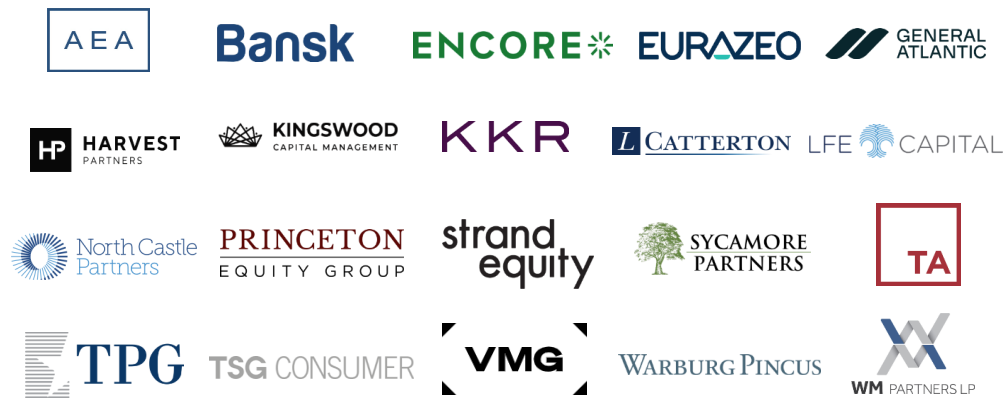
Our team has long-standing relationships with many of these firms through recent transactions in the healthcare and wellness industries. We have also tracked buyers that have been highly acquisitive across the integrative health and wellness sector. Our sector expertise and network provide us with unique insights into the buyer universe and the growth drivers that matter to them.

Meet the team behind this report

With over two decades of experience, Jacob is a Managing Director and Co-Founder of Navagant, having played a vital role in establishing the firm’s brand presence and client relationships. He has earned recognition as a leader in the education and training industry. Jacob began his career at Rabobank International before focusing on software and direct marketing industries with Andersen Corporate Finance LLC. In 2003 he founded Capstone Partners and led their Education and Training Practice until 2023, when he co-founded Navagant.

Shawn is a Managing Director and Founding Member of Navagant with over 18 years of investment banking experience. Formerly, Shawn was with Raymond James investment banking, where he focused on deal execution and client development for both public and private companies. He has led execution efforts on 70+ transactions resulting in more than $3.5 billion of proceeds for clients. Shawn’s previous experience includes serving as an officer in the U.S. Navy — as a destroyer navigator and communications officer, student naval aviator, and fleet Tomahawk cruise missile officer.

Jeff is a Director at Navagant with over 15 years of Capital Markets, M&A, and Corporate Finance experience across multiple industries — including Consumer & Retail, Industrials, Energy, Logistics, Business Services, and Specialty Finance. Prior to joining Navagant as a Founding Member, he was a Vice President at Capstone Partners and a Senior Vice President in BB&T Capital Markets’ Debt Capital Markets team, where he helped originate over $500 billion in corporate bonds. He began his career as an Analyst in BB&T Capital Markets’ M&A group.

Cherry is an Analyst at Navagant. Prior to Navagant, she was an Analyst in Capstone Partners’ Education and Training practice. Cherry is keen on learning about the financial markets. She has interned at Allied Millennial Partners as an investment banking analyst and at Shenzhen Stock Exchange as a fixed income analyst.
Endnotes & sources
- Tang, Lucy. Alternative Healthcare Providers in the US: Market Size 2024–2025. IBISWorld, NAICS 62139b, Mar. 2025.
- National University of Health Sciences. Latest Survey on Complementary Health Approaches Shows Dramatic Increase in Popularity among U.S. Adults. NUHS, Apr. 2023.
- Gordon, Deb. 33% of Gen Zers Trust TikTok More than Doctors, New Survey Shows. Forbes, Dec. 2022.
- National Center for Complementary and Integrative Health. Complementary, Alternative, or Integrative Health: What’s In a Name? NCCIH, Apr. 2021.
- Worldwide Integrative Healthcare. The Future of Wellness: How Worldwide Integrative is Redefining Holistic Health in 2025. Feb. 2025.
- Lloyd, Iva, and Amie Steel. Effectiveness of Naturopathic Clinical Practice. World Naturopathic Federation, 2021.
- Google Trends. Holistic Health. Retrieved July 2025.
- PitchBook Data, Inc.
- PricewaterhouseCoopers. Global M&A Trends in Health Industries: 2025 Mid-Year Outlook. PwC, 2025.
- Make America Healthy Again PAC. Make America Healthy Again. 2025.
- Goldman, Erik. As Trump Tariffs Hit, Supplement Costs Will Surge. Holistic Primary Care, Apr. 2025.
- Glatter, Robert. American Health Care Will Suffer under Trump’s Tariffs. TIME, Apr. 2025.
- Taylor, Phil. Lilly Unveils $27bn Reshoring Drive around Four New Plants. Pharmaphorum, Feb. 2025.
- Sprout Social. Wellness Influencer Engagement Data. 2024–2025.