


Private Capital in Early Childhood Education & Youth Enrichment
Early childhood education and youth enrichment remain among the most fragmented service markets in the U.S.: the five largest child care operators hold roughly 6% of center-based capacity. For owners, the result is a deeper buyer universe, a wider range of structures and a clear premium for businesses that fit an existing platform.
Early childhood education and youth enrichment remain among the most fragmented service markets in the U.S.: the five largest child care operators hold roughly 6% of center-based capacity. What has changed is how quickly scale is being assembled.
Leading platforms now pass from one private equity owner to the next, with each sponsor funding a defined stage of growth, and capital that once stopped at the franchisor is now backing regional chains and multi-unit franchisees. For owners, the result is a deeper buyer universe, a wider range of structures and a clear premium for businesses that fit an existing platform.
How Institutional Capital Is Accelerating Scale in Early Childhood Education & Youth Enrichment
Scale is built in relays. The Learning Experience has passed from Norwest to Golden Gate to Harvest Partners and opened its 500th center this month. Big Blue Marble Academy more than tripled under Avathon before Leeds Equity acquired it at 67 schools; it now reports nearly 100. Each owner underwrites the next stage of growth.
Capital is moving down-market. Sponsors are backing the operators inside franchise systems, not only the brands. Taurus-backed Pathlight (Primrose) and Hidden River-backed Somersault (The Little Gym) each acquired multi-unit groups in 2026 while carrying pipelines of 11 and 12 additional locations, respectively.
Buyers pay for repeatable scale. Premium outcomes go to businesses that can show proven unit economics, a predictable ramp for new locations and the management depth to keep growing. Sponsors’ willingness to fund that growth is what sustains today’s pace of consolidation.
KinderCare 10-K, Jan. 2026
CRS, Oct. 2024
Brown & Herbst, Oct. 2026
BPC, Oct. 2026
A Fragmented Market, a Concentrated Capital Base
The sector spans licensed child care and preschool and youth enrichment programs such as swim, gymnastics, sports and tutoring. Each remains deeply fragmented, yet institutional ownership is already concentrated among the largest operators. That combination explains where capital is moving next: toward the regional chains and multi-unit franchisees that form the sector’s second tier.
What the Ownership Data Says About Pace
Private equity’s share of the child care workforce climbed from under 1% in 1997 to roughly 9% by 2010 and has held near 10% since. The first phase of institutional ownership was about entering the market; the current phase is about compounding it. Capital is recycling through platforms already at scale and reaching down to the next tier of operators, and with the largest providers holding a single-digit share of capacity, that tier remains deep.
| Segment | Dominant operating models | What sponsor capital funds | What sets the speed limit |
|---|---|---|---|
| Child care & preschool | Corporate-owned centers; franchise systems (Primrose, Goddard, TLE) | Acquisition of regional clusters; de novo centers; franchisee platforms | Teacher supply, tuition affordability and subsidy reimbursement |
| Youth enrichment | Franchise and asset-light, hosted formats (swim, gymnastics, sports, tutoring) | Franchisee roll-ups; unit development; multi-brand franchisors | Discretionary household spend, instructor retention and seasonality |
Constraints That Set the Pace
Capital does not remove the operating limits on growth. KinderCare’s same-center occupancy fell 200 basis points to 67.8% in fiscal 2025, a reminder that scale does not insulate operators from affordability pressure, and teacher availability still governs how much capacity any center can serve. Policy is a newer variable: federal and state proposals would restrict public child care funds flowing to PE-backed providers, which makes a center’s subsidy mix part of diligence.
The Sponsor Relay: How Scale Compounds Across Owners
The clearest evidence of institutional capital’s effect on pace is the chain of owners behind today’s largest platforms. Each sponsor funds a defined stage of growth, whether acquisitions, new-center development or systems, then sells to a larger sponsor that underwrites the next stage. Growth compounds across successive holds rather than resetting with each sale.
What the Relay Means for Owners
Buyers underwrite the next stage, not the last one. A platform in its second or third hold is buying growth it can hand to its next owner. Regional groups that fill gaps in its footprint draw competitive interest because they shorten that plan.
Exits recycle into new platforms. Weeks after selling Big Blue Marble, Avathon acquired seven-school Magical Beginnings, which its 2025 report lists at 18 schools. Each exit seeds demand for the next generation of founder-owned businesses.
Sellers face professional counterparties. Repeat-hold platforms bring established diligence playbooks. Founders who arrive with center-level enrollment, staffing and pipeline data negotiate from a stronger position.
How Platforms Accelerate Scale
Sponsor capital is shortening the path to scale through three levers, which the most active platforms pursue in parallel.
1. Regional clusters, not single sites. Apax-backed Cadence added nine Especially for Children schools in the Twin Cities in one June transaction, and Traverse Pointe’s Small Miracles added three Gingerbread schools in the Tampa market in January. A cluster brings enrollment, staff, licenses and local management in a single close.
2. Capital at the franchisee level. Private equity has long backed franchisors; it now backs the operators inside those systems. Platforms such as Pathlight and Somersault buy groups of operating units within established brands and pair them with development rights, bringing institutional capital to a layer of the market that has historically grown one location at a time.
3. Funded development pipelines. Unleashed Brands signed 73 franchise agreements and opened 34 units in the first half of 2026 and is on pace for more than 85 openings this year; TLE had 240 locations in development at its 2025 sale. Sponsor capital lets platforms run acquisition and de novo programs in parallel.
| Pathlight Learning | Somersault | |
|---|---|---|
| Sponsor | Taurus Capital Partners | Hidden River Strategic Capital |
| Franchise system | Primrose Schools | The Little Gym |
| Platform formed | August 2025 | August 2023, with 7 locations |
| 2026 acquisition | 4 Omaha-area schools (September) | 6 California locations (February) |
| Operating footprint | 7 schools | 29 at announcement; 31 today |
| Development pipeline | 11 planned schools | 12 planned locations |
What Franchisee Owners Should Weigh
Franchisor consent. Transfers and recapitalizations require franchisor approval, and some systems hold rights of first refusal. Engaging the franchisor early shortens the process.
Structure. A recapitalization can provide liquidity while the owner retains equity in a larger platform and participates in its eventual sale.
Development obligations. Unopened territories add value for a platform buyer but carry opening schedules and capital commitments that need to be priced.
What Drives Value at Scale
Buyers do not pay for scale alone; they pay for evidence that scale is repeatable. Across our recent multi-site early education and youth enrichment engagements, the same factors consistently separate premium outcomes from the rest of the field, and the same issues draw the most scrutiny in diligence.
How Buyers Underwrite Growth
For businesses with young locations, buyers increasingly value ramping sites on what they will earn at maturity rather than on trailing results. That credit is earned, not assumed. It depends on historical ramp curves at existing sites, center-level reporting that separates ramping from mature performance, and a cost structure that can visibly support the growth plan. Owners who build that record for at least a full year before a process give buyers the confidence to pay for what the business will become.
Notable Platform Transactions
Platform Consolidation Transactions
June 2, 2026: Apax-backed Cadence Education acquired nine Especially for Children schools in the Twin Cities, bringing its network to 350 schools. The release also referenced an earlier three-school Ladybug acquisition, extending Cadence’s Minnesota presence.
January 31, 2024: Weeks after exiting Big Blue Marble, Avathon Capital acquired Magical Beginnings, then seven Massachusetts schools. Avathon’s 2025 report lists 18 schools across Massachusetts and Connecticut.
Sponsor-to-Sponsor Transactions
July 1, 2025: Harvest Partners acquired a majority stake in The Learning Experience from Golden Gate Capital, which retained a minority interest. TLE has since added U.K. nursery franchisor Banana Moon and opened its 500th center.
January 3, 2024: Leeds Equity Partners acquired Big Blue Marble Academy from Avathon Capital, which had backed the business since 2018 and grown it to 67 schools. BBMA has since added schools by acquisition, including its first Virginia location (The Cedarhouse School, March 2025).
Franchisor and Franchisee Transactions
April 7, 2026: Crux Capital recapitalized Ivybrook Academy, a half-day preschool franchisor; the founders retained equity and leadership roles. Ivybrook reports 58 schools open, with additional locations awarded and in development.
August 2025: Taurus Capital Partners recapitalized Pathlight Learning, a Primrose franchisee, with existing management. Pathlight has since acquired five schools in two transactions and holds rights to eleven more.
Navagant Case Study
A representative transaction from Navagant’s early childhood education and youth enrichment practice, showcasing our experience with franchisee platforms, recapitalizations, and add-on acquisitions in youth swim instruction.
Background
Legacy Swim Group brought together a 44-school platform across ten states. Its businesses provide swim instruction for children through a network of local schools. The combination joined several franchisee businesses within one platform, bringing an established operating footprint to the transaction.
Process Highlights
Navagant advised Legacy on its growth investment and recapitalization with Main Street Capital. The transaction combined franchisee businesses and included the acquisition of a five-school operator in Texas. It illustrates how a recapitalization and an add-on acquisition can form part of the same platform-building transaction, bringing existing operations together with an institutional capital partner.
Successful Outcome
The recapitalization established a 44-school platform with a capital partner to support further growth. Navagant subsequently reported that the transaction won Recapitalization Deal of the Year at the 2026 Americas M&A Atlas Awards.
Select 2026 Transactions
| Date | Target | Acquirer | Target Description |
|---|---|---|---|
| 12-Nov-26 | Ellanday Nurseries | Lion Cubs Nurseries | Operator of two early years nurseries in Lancashire, U.K. |
| 10-Nov-26 | Fledglings Nursery | Flower Pots Day Nurseries | Operator of a 72-place day nursery in Berkhamsted, U.K. |
| 06-Nov-26 | Monkey Puzzle Day Nurseries | UC Partners | Operator and franchisor of day nurseries in the U.K. |
| 03-Nov-26 | Little Birches Nursery | Kids Planet | Operator of a 128-place nursery and preschool in Sonning Common, U.K. |
| 23-Oct-26 | Daisy Maisies Day Nurseries | Storal | Operator of two nurseries with 145 places in Widnes, U.K. |
| 23-Oct-26 | Little Pumpkins Nursery | Kindred Nurseries | Operator of nurseries in South London, U.K. |
| 15-Oct-26 | Westfield House Childcare | Phoenix Park Nursery | Provider of infant care, preschool education and outdoor learning in the U.K. |
| 14-Oct-26 | Nine Edge Early Learning | Montessori Academy | Operator of nine early learning centers in Australia. |
| 13-Oct-26 | Clarecroft and Dragonflies | Kindred Nurseries | Operator of two day nurseries in Northamptonshire and Nottinghamshire, U.K. |
| 06-Oct-26 | Forest Park Day Nursery | Kids Planet | Operator of a day nursery and preschool in the U.K. |
| 02-Oct-26 | Mayfield Childcare | Embark Education | Operator of early childhood education and care centers in Australia (announced). |
| 01-Oct-26 | Mulberry Bush Nursery Group | Foresight Group | Operator of early years nurseries in the U.K.; growth investment. |
| 29-Sep-26 | Zenith Childcare | Quintas Capital | Operator of early childhood education and childcare settings in the U.K. |
| 24-Sep-26 | Mapperley Day Nursery | Kindred Nurseries | Operator of a day nursery in Nottinghamshire, U.K. |
| 22-Sep-26 | Super Start Nurseries | Kids Planet | Operator of nursery settings providing childcare and early years education in the U.K. |
| 21-Sep-26 | Toddlers Day Nursery | Kindred Nurseries | Operator of a day nursery in the U.K. |
| 09-Sep-26 | Four Omaha Primrose schools | Pathlight Learning (Taurus Capital) | Operator of four Primrose franchise schools in the Omaha, Nebraska area. |
| 07-Sep-26 | Children’s Choice Day Nursery | Kids Planet | Operator of a nursery and preschool in the U.K. |
| 06-Aug-26 | Banana Moon | The Learning Experience | Franchisor of day nurseries in the U.K.; control effective April 2026. |
| 28-Jul-26 | The Learn Well Group | Bright Stars Childcare | Operator of early childhood education and nursery settings in the U.K. |
| 16-Jul-26 | Little Learning Academy | Fractal Education | Operator of two Houston-area early learning schools; real estate included. |
| 02-Jun-26 | Especially for Children | Cadence Education (Apax) | Operator of nine early childhood education centers in the Twin Cities. |
| 07-Apr-26 | Ivybrook Academy | Crux Capital | Franchisor of half-day preschool programs; founders retained equity. |
| 25-Mar-26 | KidStrong | Princeton Equity Group | Franchisor of child development and fitness centers; strategic investment. |
| 19-Feb-26 | Six California Little Gym locations | Somersault (Hidden River) | Operator of six children’s gymnastics and enrichment locations in California. |
| 13-Jan-26 | Gingerbread Schools | Small Miracles (Traverse Pointe) | Operator of three early learning schools in the Tampa–St. Petersburg area. |
| 13-Jan-26 | East Cobb Prep | Cadence Education (Apax) | Atlanta-area early learning center; real estate included. |
Meet the Team Behind This Report
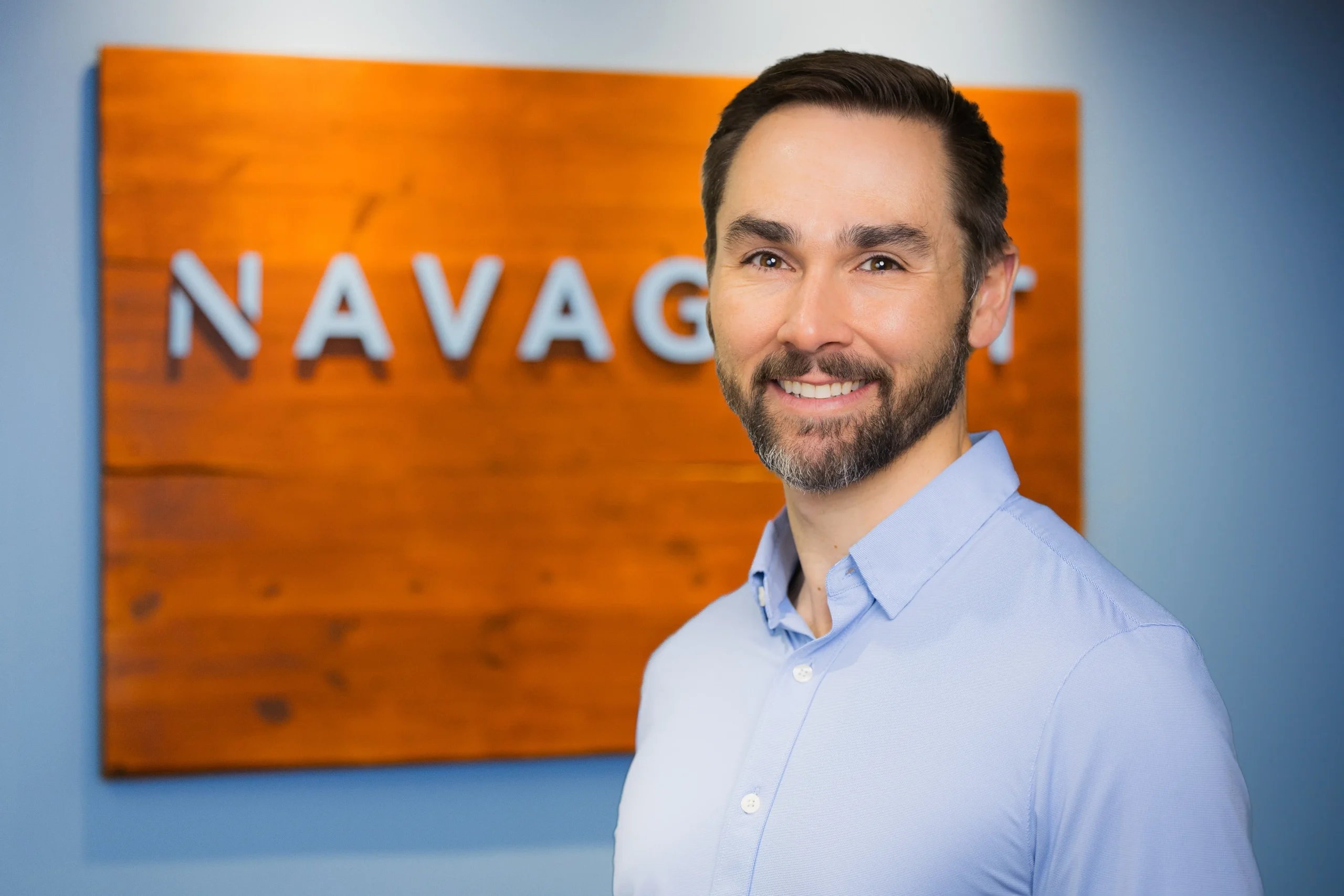
Jeff is a Director at Navagant and has over 16 years of Capital Markets, M&A, and Corporate Finance experience across Consumer & Retail, Diversified Industrials, Energy, Logistics & Transportation, Business Services, and Specialty Finance industries. Prior to joining Navagant as a Founding Member, Jeff was a Vice President in Capstone Partners’ Education and Training practice and a Senior Vice President in BB&T Capital Markets’ Debt Capital Markets Origination team, where he was integral in expanding the Bank’s Corporate Banking initiative by helping originate over $500 billion in corporate bonds. He began his career as an Analyst in the BB&T Capital Markets M&A team serving a wide variety of industries.

With over two decades of experience, Jacob is the Managing Director of Navagant, having been a key contributor since its inception. Leading as Managing Director and Co-Founder, he has played a vital role in establishing Navagant’s strong brand presence, building relationships with clients and servicing them with integrity. Demonstrating a remarkable talent for deal-making and unwavering dedication to his clients, Jacob has earned recognition as a leader in various industries, most prominently the Education and Training industry. He began his career at Rabobank International and later focused on software and direct marketing industries with Andersen Corporate Finance LLC. Then, in 2003, he founded Capstone Partners and led its Education and Training Practice until 2023, when he co-founded Navagant. As a highly accomplished leader, Jacob serves as an inspiring mentor and role model to the firm’s up-and-coming professionals, further solidifying his significant contributions to the investment banking industry.
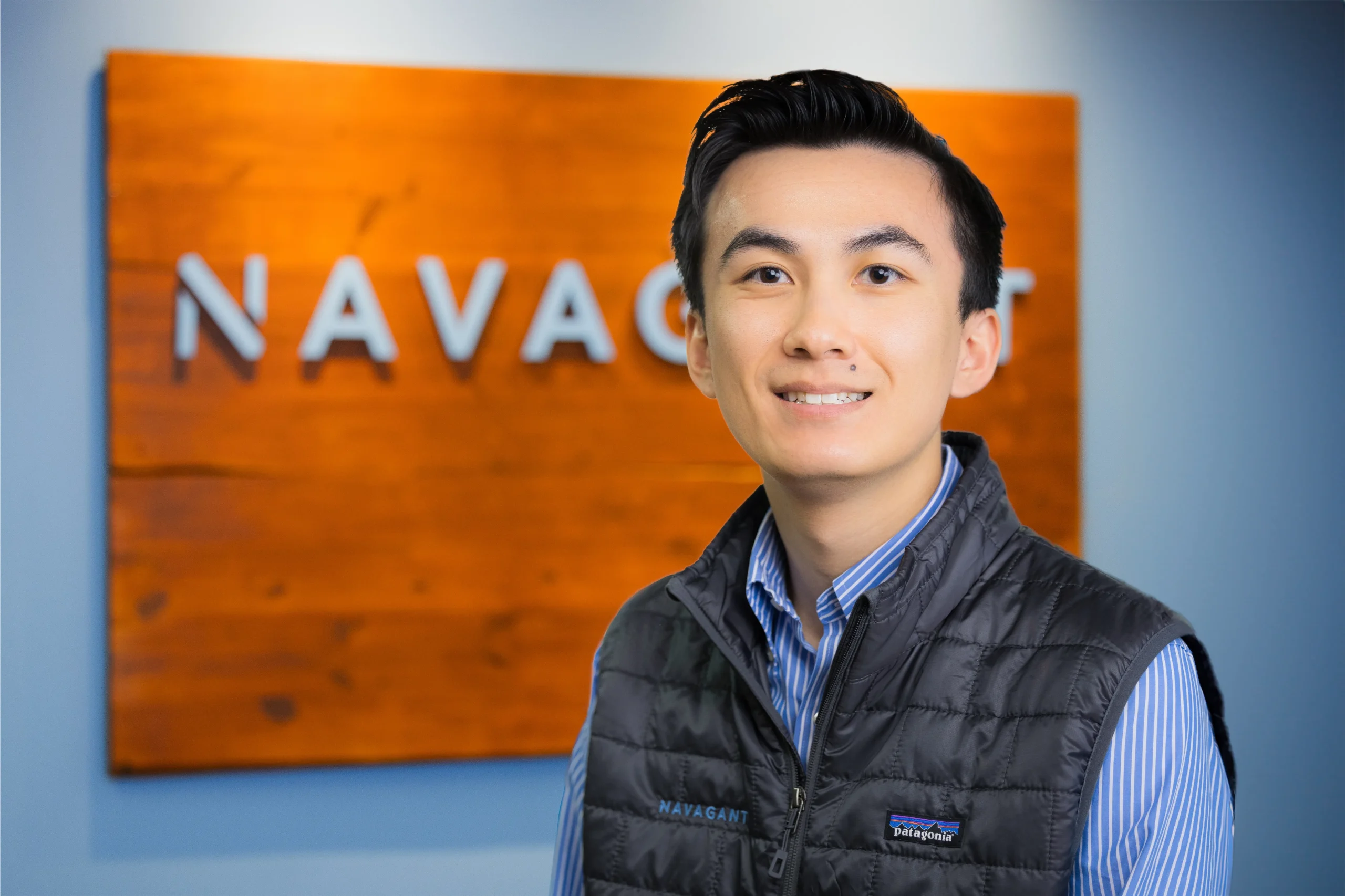
Caleb is a Vice President at Navagant. Previously, Caleb was an Associate at Capstone Partners’ Education and Training practice. Prior to Capstone, he was an Analyst at Carr, Riggs, and Ingram Capital Advisors, the investment banking subsidiary of a Top-20 regional accounting firm. He holds a BBA in Financial Management from Charleston Southern University.
Ethan is an Analyst at Navagant. He previously interned with the firm as a Summer Analyst, where he supported several M&A transactions in the education and training sector. Prior to Navagant, he held internships in wealth management and at a fundamental long/short equities hedge fund, gaining exposure to investment research and portfolio strategy.
Endnotes & Sources
- KinderCare Learning Companies. Form 10-K, fiscal year ended Jan. 3, 2026; Q4 2025 earnings call.
- Congressional Research Service. Private Equity Investments in Large For-Profit Child Care Organizations (R48252). Oct. 2024. https://www.congress.gov/crs_external_products/R/HTML/R48252.html
- Brown, J. & Herbst, C. Big Daycare: The Growth of Private Equity in the U.S. Child Care Market. IZA DP No. 18990. Oct. 2026. https://docs.iza.org/dp18990.pdf
- Bipartisan Policy Center. National and State Child Care Data Overview. Oct. 2026. https://bipartisanpolicy.org/report/national-and-state-child-care-data-overview/
- The 74. Childcare’s Private Equity Crackdown Has a Blind Spot. 2026. https://www.the74million.org/?p=1041404
- Norwest; Golden Gate Capital (Jul. 2018); Harvest Partners (Jul. 2025); The Learning Experience (Nov. 2026). Ownership and footprint announcements.
- Avathon Capital; Leeds Equity Partners. Big Blue Marble Academy transaction releases. Jan. 3, 2024. https://avathoncapital.com/avathon-capital-sells-big-blue-marble-academy-to-leeds-equity-partners/
- Apax Partners / Morgan Stanley Capital Partners. Cadence Education acquisition. Feb. 2020; Cadence Education. Jun. 2026.
- Unleashed Brands. H1 2026 growth update (Jul. 2026); 2026 growth update (Nov. 2026).
- Pathlight; Taurus Capital Partners; Hidden River; Somersault; Crux Capital. Announcements, 2025–26.
- FRANdata. Franchise Industry Ownership Landscape. 2026. https://www.franchise.org/wp-content/uploads/2026/06/FRANdata-New-Multi-Unit-Trends-2026-AO2-1.pdf
- PitchBook; company and adviser announcements. Transaction data as of Nov. 13, 2026.