


Skills Over Degrees: How Funding, Skilled Labor Shortages, and Policy Are Reshaping Career & Technical Education M&A
Shifting funding sources, acute workforce shortages, and a generational pivot away from the four-year degree are increasing demand for faster, lower-cost, outcome-oriented career and technical education pathways.
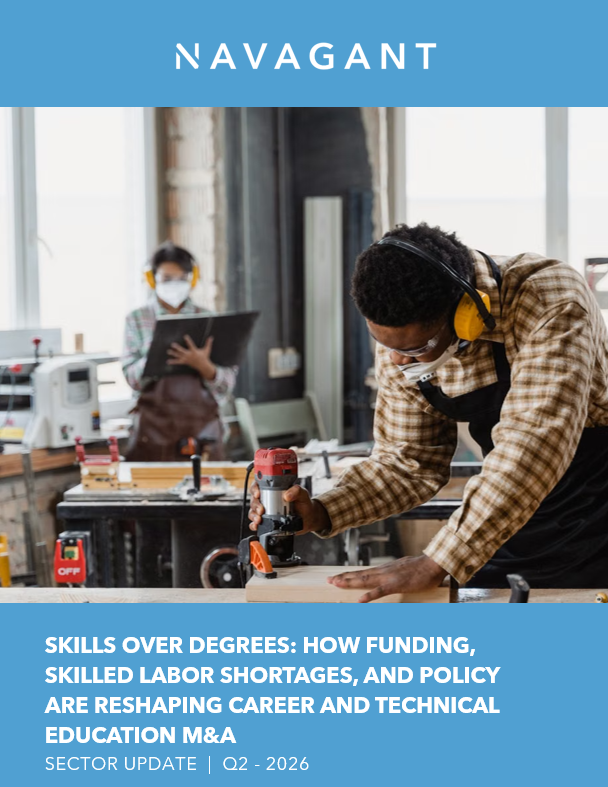
The Career, Technical, and Vocational Education (“CTE”) sector is being reshaped by shifting funding sources, acute workforce shortages, and a generational pivot away from the four-year degree. Despite Title IV institutions dominating recent headlines, an estimated 61% of trade-school students now train at non-Title IV providers: schools funded by cash pay, employer sponsorship, WIOA, and GI Bill and VA benefits rather than federal student aid. Although these institutions are still governed by the 85-15 rule, non-Title IV institutions maintain autonomy and flexibility from the administrative burden and other federal metrics that govern Title IV institutions.
With Workforce Pell launching for Title IV institutions in July 2026, providers face a strategic crossroads: stay cash-funded or opt into Title IV to capture new short-program aid. Large shortages of pilots, commercial drivers, and allied-health workers anchor demand that is largely insulated from the headwinds facing degree-granting institutions.
How Funding, Skilled Labor Shortages, and Public Policy Are Reshaping Career and Technical Education M&A
Resilient, recurring demand. The U.S. trade and technical school market is roughly $17.5 billion across more than 7,600 schools, with an estimated 61% of trade-school students at non-Title IV providers. New trade-school enrollment grew 14.4% from Fall 2023 to Fall 2024, and publicly traded operators’ enterprise values rose nearly 50% in a year. Within the verticals, the global flight-training market is growing about 13% annually and U.S. healthcare education about 9.4%.
Three high-demand sub-sectors. This report focuses on skilled trades and construction, transportation and logistics (aviation, CDL, maritime, and automotive), and healthcare training (allied health), which are highly fragmented and benefit from several notable tailwinds. Each is underpinned by a persistent labor gap: roughly 119,000 additional pilots needed across North America over the next two decades, a commercial-driver shortfall projected to exceed 160,000 by 2030, and about 1.9 million allied-health openings every year. Vocational requirements such as the FAA 1,500-hour rule and federal Entry-Level Driver Training requisites favor accredited, well-run platforms that provide the necessary path to skill certification and competency.
Highly active financial sponsor interest. While strategic activity has been consistent, financial sponsors are increasingly drawn to training services that offer resilience to macro conditions. Recent deals underscore the trend: Summit Park’s recapitalization of Thrust Flight, Acorn Capital’s Pan Am Flight Academy acquiring Alliance Aviation, Ohana Capital’s investment in Aviation Institute of Maintenance, and Turning Rock Partners’ growth investment in 160 Driving Academy, the nation’s largest CDL school.
Career, Technical & Vocational Education at a Glance
The career, technical, and vocational education sector covered here includes schools that train students for skilled jobs without participating in federal student aid. This report specifically covers trade and technical schools, flight and driving academies, and healthcare training programs. As students question the cost and return of the four-year degree and employers prioritize skills over credentials, demand is shifting toward these faster, lower-cost, and outcome-oriented pathways.
Market Size and Growth
The U.S. trade and technical school market is roughly $17.5 billion across more than 7,600 schools, and an estimated 61% of trade-school students train at non-Title IV providers. The verticals are growing on their own merits: the global flight-training market is expanding about 13% annually toward $25 billion by 2032, and the U.S. healthcare education market about 9.4% annually toward $61 billion by 2028. A meaningful tailwind arrives in July 2026, when Workforce Pell extends federal aid to short-term programs of 8 to 15 weeks, but only for providers that hold Title IV eligibility. This has created an inflection point for companies deciding whether the trade-off of receiving federal funding outweighs the flexibility offered by remaining non-Title IV.
Non-Title IV funding comes from sources outside federal student aid: cash and employer sponsorship, income-share agreements, WIOA (about $3.9 billion in Title I workforce funds, not Title IV student aid), GI Bill and VA benefits, and state workforce grants.
Key Segments
This report covers three primary sub-industries in CTE, each with distinct drivers and M&A dynamics.
Skilled Trades & Construction includes HVAC, electrical, welding, heavy-equipment, and crane training: short, hands-on certificates with strong ROI and sub-$15,000 tuition. Credentialing is employer- and apprenticeship-based (OSHA, EPA 608, NCCER, AWS, and state licensure), with program-specific regulation at the state level. The sector is largely cash- and grant-funded, with many companies offering access to programs such as WIOA or other state-specific workforce-development grants.
Transportation & Logistics includes flight and aviation training, CDL and commercial driving, plus maritime, automotive, and RV technician schools. Each lane has its own regulatory gate (FAA Part 141/61/142 and the 1,500-hour ATP rule; USCG Merchant Mariner Credentials with STCW and TWIC). Aviation draws significant buyer interest, with roughly 119,000 new North American pilots needed over the next two decades. CDL is the most consolidated lane, with a driver gap above 160,000 by 2030 and the FMCSA training registry favoring accredited schools.
Healthcare Training includes short allied-health certificate and externship pathways for roles such as medical assistant, dental assistant, pharmacy technician, surgical technologist, and patient care technician. Providers range from hands-on schools such as Zollege to online platforms such as Stepful and nursing and allied-health institutions including Unitek Learning and MedCerts. Allied health covers roughly 12 million workers and is the fastest-growing segment of the healthcare workforce. M&A is splitting two ways: hospital systems acquiring schools for captive talent pipelines and tech-first platforms buying accredited campuses to build their physical brick-and-mortar presence.
M&A Trends & Drivers
Career and technical education is an active M&A market, headlined by a highly fragmented supply of founder-owned schools. Scaled financial-sponsor platforms in this sector remain scarce. A few early movers have begun platform-and-add-on strategies, bolting smaller schools onto scaled flight, CDL, or trade platforms to add locations and adjacent verticals.
Current State of M&A Activity
Outside of transportation, there has not been considerable consolidation, with sponsors hunting for proven platforms that are regulatory compliant, hold diversified funding sources, and offer multiple avenues for future growth. This has left an open runway to build the first scaled, multi-vertical platform. Incoming regulatory changes to the Title IV landscape may also affect how sponsors and strategics view and value single-site versus multi-site operators, revenue diversification, and student-outcome data.
Key Drivers of M&A Activity
The level of M&A activity is not transient; it is driven by several key factors that make career and technical education a compelling and durable target for acquisition.
Fragmented market with clear rollup economics. The market ranges from a handful of multi-location platforms to thousands of independent, founder-owned trade schools, flight and driving academies, and healthcare schools. Scale is increasingly required to fund recruiting, equipment, fleets, and accreditation, creating a clear opportunity for acquirers to roll up niche providers, add locations, and build multi-vertical platforms. Recent activity has concentrated in transportation and logistics, the most active segment for deals over 2024 to 2025, even though skilled trades is the larger market by revenue.
Structural workforce shortages anchor demand. Demand is tied to chronic, structural labor gaps. North America needs roughly 119,000 new pilots over the next 20 years, the commercial-driver gap is projected above 160,000 by 2030, and roughly 1.9 million openings occur annually across allied health. These shortages convert training from a discretionary purchase into an operational necessity for employers and learners alike. Regulatory gates such as the FAA 1,500-hour rule and federal Entry-Level Driver Training requirements reinforce demand for accredited, high-quality programs.
The demographic shift away from the four-year degree. Skepticism about the cost and return of a four-year degree is steering students toward faster, cheaper, job-aligned alternatives. Trade-school enrollment grew about 4.9% from 2020 to 2025 while university enrollment fell, and new trade-school enrollment jumped 14.4% from Fall 2023 to Fall 2024. Employers increasingly hire on skills and credentials rather than degrees, expanding the addressable base for these providers. This shift is structural rather than cyclical, and it favors companies with strong placement outcomes and diversified funding sources.
The funding universe is bifurcating. Cash-pay, employer-sponsored, and VA-funded programs are insulated from the policy swings that hit Title IV institutions, while WIOA (about $3.9 billion in Title I) and state grants supply a steady channel through approved-provider lists. Workforce Pell, effective July 2026, adds federal aid for short programs but only for Title IV-eligible institutions, pushing some cash-funded providers to weigh opting in. The net effect is a sector splitting into durable, diversified-funding providers on one side and aid-dependent operators on the other.
CTE M&A should remain active and broaden in 2026 and beyond. A deeply fragmented supply of founder-owned schools, persistent workforce shortages, and the accelerating shift away from the four-year degree continue to draw both strategic acquirers and financial sponsors. With few scaled platforms built to date, the opportunity to consolidate niche providers, add locations, and assemble multi-vertical platforms remains largely open, favoring early movers that pair strong student outcomes with diversified, non-Title IV funding.
| Sub-Industry | U.S. Market Size | Students | Active Providers | Demand Driver |
|---|---|---|---|---|
| Skilled Trades & Construction | ~$17.5B | ~1.5M enrolled | ~7,625 trade & technical schools | Chronic building-trades shortages; new trade-school enrollment up 14.4% year over year |
| Transportation & Logistics | ~$5.4B | ~50K pilots/yr | ~500 FAA Part 141 pilot schools | ~119,000 new pilots needed over the next 20 years; commercial-driver gap above 160,000 by 2030 |
| Healthcare Training | ~$39.2B | ~440K grads/yr | ~2,700 CAAHEP programs (1,400 institutions) | ~12 million allied-health workers, over 60% of the healthcare workforce; ~1.9 million annual openings |
Emerging Trends
Four emerging trends have been a consistent part of the CTE landscape spanning both Title IV and non-Title IV institutions: a generational shift toward alternative career training, expanding access through non-Title IV funding, a distinct regulatory framework anchored by the 85-15 rule, and the 2026 arrival of Workforce Pell. Together they mark a structural reallocation of students and dollars away from the traditional four-year degree toward faster, lower-cost, job-aligned credentials. Skepticism about the cost and return of a bachelor’s degree, employers hiring increasingly on demonstrated skills, and persistent labor shortages in the fields these schools serve are steadily widening the addressable market for non-Title IV providers. At the same time, the funding map is bifurcating, separating durable, diversified-funding operators from aid-dependent models and sharpening the lens through which buyers underwrite risk. Below are the emerging trends defining where value accrues, and where risk concentrates, in 2026 and beyond.
Alternative career training is gaining traction. Students are increasingly bypassing the traditional four-year path for career and technical programs that offer faster timelines, lower cost, and strong ROI. These programs are versatile and built around student schedules through evening and online-hybrid modalities, broadening their appeal. Trade-school enrollment is rising while university enrollment declines, and employers increasingly hire on demonstrated skills and credentials rather than degrees.
Alternative funding is expanding access. Beyond cash pay, students increasingly fund training through WIOA grants (about $3.9 billion in Title I formula funds), GI Bill and VA education benefits, state workforce grants, and institutional aid. These channels broaden the addressable population without reliance on Title IV federal student aid. Employer sponsorship and income-share agreements add further non-dilutive demand, making diversified, durable funding a core part of the value proposition for acquirers. Because these sources are appropriated or employer-backed rather than tied to a single federal student-aid program, they can be resilient across enrollment and policy cycles. This gives operators steadier, more predictable revenue than their peers.
The 85-15 rule defines the regulatory landscape. Non-Title IV providers that enroll veterans are governed by the VA 85-15 rule, which limits the share of students in any single program funded by VA or DoD benefits. For buyers, funding-source durability and 85-15 compliance are central value drivers, alongside program- and offering-specific requirements such as providing pilots enough flight hours to reach the FAA’s 1,500-hour minimum or meeting federal Entry-Level Driver Training requirements. Operators that balance benefit-funded enrollment with cash, employer, and grant revenue carry lower regulatory risk, and clean compliance track records command a premium in diligence as acquirers underwrite the durability of each revenue stream.
Workforce Pell is the 2026 catalyst. Effective July 1, 2026, Workforce Pell extends federal Pell aid to short-term programs of 8 to 15 weeks in fields including healthcare, transportation, and skilled trades, but only at Title IV-eligible institutions. This will force strategic decisions for cash-funded providers and spur further M&A and strategic partnerships as platforms acquire or partner for eligibility. Recent deals, including Pan Am Flight Academy and Alliance Aviation and Sonoran Desert Institute and CL Driving School, show consolidation already well underway across career and technical education. This change may incentivize platforms that can move quickly on accreditation and fold smaller, cash-funded schools into a Title IV-eligible structure, accelerating growth timelines and widening the gap between scaled platforms and independent operators.
Notable Sub-Sector Transactions
Transportation & Logistics
March 2024 to March 2025: RelyOn acquired Thomson Bridge, Quercus Technical Services, GlobalExSolutions, Interlink Training, Develop Training, O.S.T. Cuxhaven, PetroSkills, and Clyde Training Solutions, each for an undisclosed sum, adding electrical and high-voltage safety training, offshore wind and GWO certification, maritime and HUET training, and oil and gas technical content to its global platform. The targets span the United Kingdom, the Netherlands, Germany, the United States, and Australia, bringing nationally accredited programs, regional training centers, and specialist instructors. The activity reflects workforce-training providers consolidating fragmented regional operators into broader enterprise competency platforms.
January 2026: Pan Am Flight Academy acquired Alliance Aviation for an undisclosed sum, expanding its simulator-based airline training capabilities and strengthening its commercial reach across Latin America and other international markets. Alliance is a Florida-based FAA Part 142 training organization serving a global customer base and will continue operating as a Pan Am division under founder Federico Flores, building on the companies’ longstanding partnership. The deal reflects aviation-training platforms consolidating specialized capacity, customer relationships, and international airline exposure.
Skilled Trades & Construction
May 2024: Argosy Private Equity acquired a controlling interest in Heavy Equipment Colleges of America for an undisclosed sum, investing in a scaled vocational-training platform serving infrastructure and construction trades. HECOA provides accelerated, hands-on training in heavy-equipment operation, crane operation, directional drilling, and HVAC across campuses in Georgia, Oklahoma, California, and Washington. The transaction reflects continued sponsor interest in career and technical education providers with recognized credentials, direct alignment with employer demand, and exposure to occupations facing persistent skilled-labor shortages.
October 2025: Cotulla Education acquired American Lineman College for an undisclosed sum, adding electrical line-worker training to its portfolio of career-focused institutions and expanding its exposure to essential-infrastructure trades nationwide. American Lineman College is a Bakersfield-based hybrid training provider that has graduated hundreds of pre-apprentice line and utility workers, with reported placement rates above 90% and graduation rates above 85%. The deal reflects vocational-education groups expanding into labor-constrained trades with strong employer demand, attractive earnings, and measurable student outcomes.
Healthcare Training
May 2026: HCA Healthcare agreed to acquire The College of Health Care Professions for an undisclosed sum, extending its healthcare-education footprint and strengthening its pipeline of allied-health professionals across a national care network. Houston-based CHCP educates more than 8,000 students annually across 10 Texas campuses and online, offers more than 20 accredited programs, and has prepared over 52,000 graduates since 1988. The deal reflects healthcare systems investing directly in education capacity to address persistent clinical-workforce shortages and align training with employer needs.
January 2026: Stepful acquired St. Louis College of Health Careers through a stock purchase transaction for undisclosed terms, adding accredited campus-based programs to its technology-enabled healthcare-training platform. Founded in 1981, SLCHC operates campuses in St. Louis and Fenton, Missouri, and offers accredited degree and non-degree programs in nursing, medical assisting, physical therapy, and other allied-health fields. The deal reflects digital training companies acquiring regulated institutions to broaden credentials, delivery formats, employer relationships, and access to healthcare career pathways.
Navagant Case Studies
Representative transactions from Navagant’s career, technical, and vocational education practice, showcasing our expertise across heavy-equipment and skilled-trades training and aviation and energy technical education.

Background
Heavy Equipment Colleges of America (“HECOA”) is a leading provider of heavy equipment, crane, and directional-drill training, preparing students to operate machinery such as bulldozers, excavators, cranes, and backhoes. Across campuses in Georgia, California, Oklahoma, and Washington, it delivers accelerated three-week programs and an associate degree, pairing classroom instruction with immersive, hands-on training and posting leading graduation and placement rates alongside blue-chip employer partners. Evolution Capital Partners had backed HECOA since 2015, supporting its West Coast expansion and new program development.
Process Highlights
Navagant led a targeted process that capitalized on a major tailwind: rising infrastructure investment and growing demand for skilled trades workers. By showcasing HECOA’s affordable, three-week training model and strong student outcomes, Navagant attracted a mission-aligned partner in Argosy Private Equity.
Successful Outcome
HECOA was recapitalized by Argosy Private Equity, which will provide growth capital to fund planned expansion and new program development, broadening access to high-quality training for veterans and career-changers nationwide.

Background
Founded in 1969, MIAT College of Technology is a respected career training institute with campuses in Canton, MI and Houston, TX. The Company has educated thousands of students across aviation maintenance, energy, logistics, and HVACR, equipping graduates to pursue in-demand technical careers. MIAT’s hands-on, industry-aligned programs have made it a trusted talent pipeline for the aviation and energy sectors.
Process Highlights
Navagant advised MIAT on its sale to Universal Technical Institute (UTI), a nationally recognized leader in industry-aligned technical education. The process positioned MIAT’s specialized aviation and energy expertise to a strategic acquirer pursuing nationwide growth and program diversification.
Successful Outcome
MIAT was acquired by UTI, expanding access to high-quality aviation and energy training nationwide while enhancing program offerings and career opportunities for students and helping bridge the skilled-trades gap.
Meet the Team Behind This Report

Caleb is a Vice President at Navagant. Previously, Caleb was an Associate at Capstone Partners’ Education and Training practice. Prior to Capstone, he was an Analyst at Carr, Riggs, and Ingram Capital Advisors, the investment banking subsidiary of a Top-20 regional accounting firm. He holds a BBA in Financial Management from Charleston Southern University.

With over two decades of experience, Jacob is the Managing Director of Navagant, having been a key contributor since its inception. Leading as Managing Director and Co-Founder, he has played a vital role in establishing Navagant’s strong brand presence, building relationships with clients and servicing them with integrity. Demonstrating a remarkable talent for deal-making and unwavering dedication to his clients, Jacob has earned recognition as a leader in various industries, most prominently the Education and Training industry. He began his career at Rabobank International and later focused on software and direct marketing industries with Andersen Corporate Finance LLC. Then, in 2003, he founded Capstone Partners and led its Education and Training Practice until 2023, when he co-founded Navagant. As a highly accomplished leader, Jacob serves as an inspiring mentor and role model to the firm’s up-and-coming professionals, further solidifying his significant contributions to the investment banking industry.

Shawn is a Founding Member and Managing Director of Navagant and brings over 19 years of experience to the firm. Shawn has led execution efforts on 70+ transactions resulting in over $3.5 billion of proceeds for clients. He assists owners of middle-market companies in achieving their strategic growth objectives, exit strategies, and liquidity goals. Formerly, he served as a Managing Director of Capstone Partners in the Education and Training practice. His investment banking career began with Raymond James, where he focused on deal execution and client development for both public and private companies. Shawn’s previous experience includes serving as an officer in the US Navy where he served as a destroyer navigator and communications officer, student naval aviator, and fleet Tomahawk cruise missile officer.
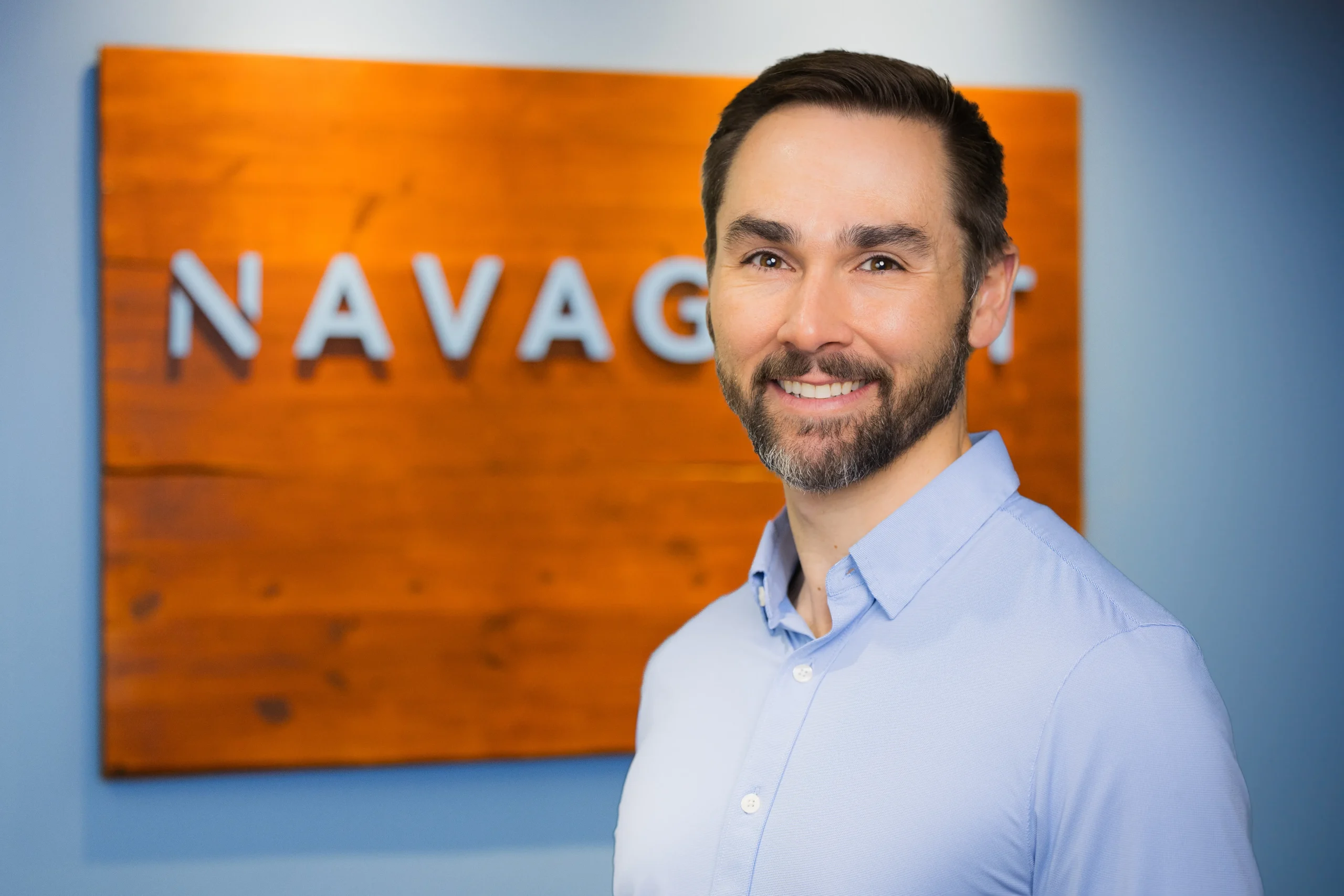
Jeff is a Director at Navagant and has over 16 years of Capital Markets, M&A, and Corporate Finance experience across Consumer & Retail, Diversified Industrials, Energy, Logistics & Transportation, Business Services, and Specialty Finance industries. Prior to joining Navagant as a Founding Member, Jeff was a Vice President in Capstone Partners’ Education and Training practice and a Senior Vice President in BB&T Capital Markets’ Debt Capital Markets Origination team, where he was integral in expanding the Bank’s Corporate Banking initiative by helping originate over $500 billion in corporate bonds. He began his career as an Analyst in the BB&T Capital Markets M&A team serving a wide variety of industries.

Sachin is a Vice President at Navagant. Prior to Navagant, he was an Associate in Capstone Partners’ Education and Training practice and an Analyst at DC Advisory in the industrials group, focused on sell-side and buy-side M&A advisory. He also interned at Sagent Advisors in Chicago, IL.
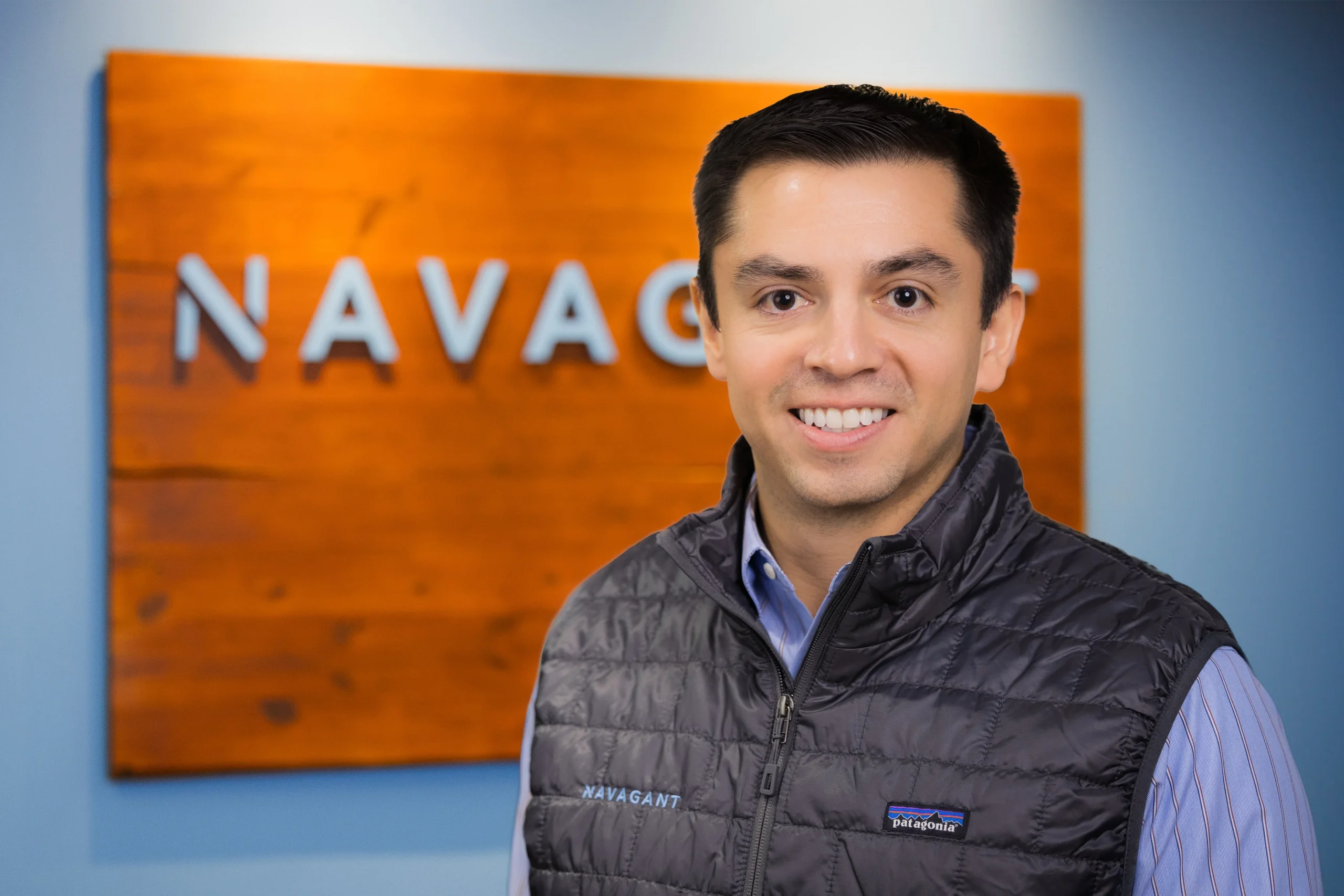
Jorge is a Senior Vice President at Navagant and has over 10 years of investment banking and commercial banking experience with expertise in M&A, leveraged finance, and project finance. Prior to joining Navagant as a Founding Member, Jorge was a Vice President in Capstone Partners’ Education and Training practice.
Endnotes & Sources
- Validated Insights. Trade Schools Market Report. 2025. https://validatedinsightstradeschools2.carrd.co/
- IBISWorld. Trade & Technical Schools in the US (NAICS 61151). 2025. https://www.ibisworld.com/united-states/industry/trade-technical-schools/1535/
- U.S. Department of Education. Final Rule to Create the Workforce Pell Grant Program. 2026. https://www.ed.gov/about/news/press-release/us-department-of-education-issues-final-rule-create-new-workforce-pell-grant-program
- eLearning Industry. Vocational Training: Benefits And Modalities. 2025. https://elearningindustry.com/vocational-training
- U.S. Department of Veterans Affairs. The 85/15 Rule. https://benefits.va.gov/gibill/85_15/85_15_homepage.asp
- National Association of Counties. Workforce Innovation and Opportunity Act (WIOA) Funding. 2025. https://www.naco.org/resources/support-workforce-and-local-business-development-workforce-innovation-and-opportunity-act
- U.S. Department of Labor, Employment and Training Administration. Skills Training Grants. 2025. https://www.dol.gov/agencies/eta/skills-training-grants
- U.S. Department of Education, Office of CTE. Perkins V State Allocations. 2025. https://cte.ed.gov/grants/state-formula-grants/state-allocations
- Boeing. Pilot and Technician Outlook 2025-2044. 2025. https://www.boeing.com/commercial/market/pilot-technician-outlook
- The Wall Street Journal. Skilled Trades Are Recruiting in High Schools. 2025. https://www.wsj.com/lifestyle/careers/skilled-trades-high-school-recruitment-fd9f8257
- Coherent Market Insights. Flight Training Market. 2026. https://www.coherentmarketinsights.com/industry-reports/flight-training-market
- Central Technology Center / American Trucking Associations. Truck Driver Shortage. 2025. https://centraltech.edu/truck-driver-shortage/
- Commercial Carrier Journal. 160 Driving Academy and CDL Regulatory Dynamics. 2025. https://www.ccjdigital.com/regulations/video/15772451/how-dots-noncitizen-cdl-crackdown-is-affecting-driver-recruiting
- Mordor Intelligence. Coding Bootcamp Market. 2026. https://www.mordorintelligence.com/industry-reports/coding-bootcamp-market
- ISC2 / CyberSeek. Cybersecurity Workforce Study and Skills Gap. 2025. https://www.techtarget.com/searchsecurity/tip/Cybersecurity-skills-gap-Why-it-exists-and-how-to-address-it
- PitchBook; PrivSource; BusinessWire; PRNewswire. Selected M&A transactions. 2024-2026. https://www.privsource.com/acquisitions/education/2025